
How Chinese Zodiac Years Work: Birth Years and Annual Cycles
The Chinese zodiac is often described as a simple twelve-animal cycle, but real calendar boundaries are more nuanced. Your zodiac animal does not automatically change on January 1, the animal cycle is only one layer of a larger sixty-year stem-branch system, and people born in January or February may need to verify which year boundary their source is using.
The Chinese zodiac is one of the most recognizable Chinese cultural systems in the world. Many people know their animal sign—Rat, Ox, Tiger, Rabbit, Dragon, Snake, Horse, Goat, Monkey, Rooster, Dog, or Pig—but fewer understand how the years are actually counted. That gap creates common errors, especially for births near Chinese New Year.
This guide explains how Chinese zodiac years work, how birth-year animals are assigned, why the zodiac year does not follow January 1, how the twelve animals connect with the Earthly Branches, how Heavenly Stems and the Five Elements create a sixty-year cycle, why some Bazi systems use the Beginning of Spring, and how annual zodiac themes can be used responsibly for readings and gifts. For a broader overview of the animal meanings themselves, start with the Chinese Zodiac Guide.
Quick Answer: How Do Chinese Zodiac Years Work?
Simple version: The Chinese zodiac repeats through twelve animal signs in a fixed order. In popular Chinese zodiac use, the animal year changes at Chinese New Year rather than January 1. The twelve animals are also paired with a ten-part Heavenly Stem cycle, creating sixty distinct stem-branch year combinations before the full pattern repeats.
This means “Year of the Horse” returns every twelve years, but “Fire Horse” returns every sixty years. A person born in January 1990, for example, should not automatically assume they belong to the Horse year simply because 1990 is commonly listed as a Horse year. They need to check whether their birthday occurred before or after that year’s Chinese New Year boundary.
The Chinese Zodiac Uses a Repeating Twelve-Year Animal Cycle
The most familiar layer of the zodiac is the repeating animal sequence. Historical evidence shows that the conventional order of the twelve animals was established by the Eastern Han period, and the sequence has remained recognizable for centuries.
Each year corresponds with one animal, and after Pig the cycle returns to Rat. Because there are twelve signs, the same animal returns every twelve years. That repeating structure makes the zodiac useful for birth-year identity, family storytelling, Chinese New Year themes, annual products, and cultural education.
The twelve-year cycle should not be treated as a complete destiny system. It is a broad year-level framework. More detailed Chinese calendrical and reading traditions use additional information such as Heavenly Stems, Five Elements, month, day, hour, and seasonal context.
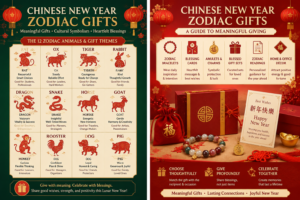
The Twelve Chinese Zodiac Animals in Order
English translations vary slightly. Goat may also appear as Sheep or Ram. The underlying branch is 未 (Wèi), so the translation difference does not create a different position in the twelve-year cycle.
Chinese Zodiac Years Do Not Automatically Begin on January 1
The most common zodiac-sign error comes from treating the Gregorian calendar year as the zodiac year. Chinese New Year follows a lunisolar calendar and falls on a different Gregorian date each year, generally in January or February.
For popular zodiac use, the incoming animal year begins on the first day of the Chinese lunar year. That means two people born in the same Gregorian year can belong to different zodiac animals if one was born before Chinese New Year and the other after it.
How to Check a Chinese Zodiac Sign for January or February Birthdays
Start with the Full Birth Date
Use the year, month, and day rather than the year alone.
Find Chinese New Year for That Gregorian Year
The date changes annually, so use a reliable calendar source rather than assuming February 1 or another fixed date.
Compare the Birthday with the Boundary
If the person was born before Chinese New Year, the popular zodiac animal usually belongs to the previous lunar year.
Check the Method if Ordering a Bazi Reading
Some Four Pillars methods use the solar term Li Chun for the year pillar, so the result can differ for a narrow early-February period.
For gift personalization, this verification is especially important. Printing the wrong animal on a card, bracelet, or corporate gift creates an avoidable cultural and customer-service problem.
The Zodiac Animals Are Connected with the Twelve Earthly Branches
The animals are not isolated from the traditional calendar. Each animal corresponds with one of the Twelve Earthly Branches. Rat corresponds with Zǐ, Ox with Chǒu, Tiger with Yín, and so on through Pig with Hài.
The Earthly Branches appear in traditional calendrical systems beyond year animals. They also help structure months, hours, and other time divisions in Chinese calendrical and metaphysical traditions. This is one reason the zodiac is more than a set of twelve personality mascots.
For a beginner, it is enough to understand that the animal is a memorable cultural representation of a deeper calendrical category. More technical systems such as Bazi use the branch itself together with the Heavenly Stem and other chart positions.
Heavenly Stems Add Five Elements and Yin-Yang Structure
A twelve-animal label does not fully identify a traditional Chinese year. Years also use one of the Ten Heavenly Stems. The ten stems can be understood as five element categories—Wood, Fire, Earth, Metal, and Water—each expressed in Yin and Yang forms.
| Element | Yang Stem | Yin Stem | Common English Year Labels |
|---|---|---|---|
| Wood | 甲 Jiǎ | 乙 Yǐ | Wood Rat, Wood Snake, etc. |
| Fire | 丙 Bǐng | 丁 Dīng | Fire Horse, Fire Goat, etc. |
| Earth | 戊 Wù | 己 Jǐ | Earth Monkey, Earth Rooster, etc. |
| Metal | 庚 Gēng | 辛 Xīn | Metal Dog, Metal Pig, etc. |
| Water | 壬 Rén | 癸 Guǐ | Water Rat, Water Ox, etc. |
Because the ten stems rotate together with the twelve branches, not every element-animal combination appears every twelve years. The combined structure takes sixty years to return to the same stem-and-branch pair.
Why the Full Chinese Zodiac Calendar Has a Sixty-Year Cycle
The twelve Earthly Branches and ten Heavenly Stems advance together. Because the two cycle lengths are different, the same exact pairing repeats after sixty steps. This is often called the sexagenary cycle or sixty-year stem-branch cycle.
That distinction explains why a person may meet their zodiac animal every twelve years but encounter the exact same element-animal combination only every sixty years. A Horse year can be Wood Horse, Fire Horse, Earth Horse, Metal Horse, or Water Horse across the larger cycle.
The sixty-year framework gives annual themes more specificity while also showing why reducing an entire year to one animal stereotype is incomplete. “Horse year” is broad. “Bǐng-Wǔ Fire Horse year” identifies a more specific calendrical pairing.
Current Example: 2026 Is the Year of the Fire Horse
2026 Chinese New Year: February 17, 2026
Animal: Horse (午 · Wǔ)
Heavenly Stem: 丙 (Bǐng), Yang Fire
Common English label: Fire Horse
For popular Chinese New Year zodiac use, a child born on February 10, 2026 would still fall before the 2026 Chinese New Year boundary and would therefore normally be associated with the preceding lunar-year animal. A child born on February 20, 2026 would fall after the boundary and be associated with the Horse year.
The example demonstrates why annual animal charts should include actual date ranges instead of listing only “2026 = Horse.”
Chinese New Year vs Li Chun: Why Some Bazi Sources Give a Different Year
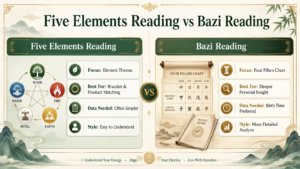
For general Chinese zodiac use, Chinese New Year is the most understandable boundary. However, some Four Pillars or Bazi systems use Li Chun, the Beginning of Spring solar term, as the boundary for the year pillar.
Li Chun usually occurs around February 3–5, while Chinese New Year can fall later. Therefore, a person born during the short period between Li Chun and Chinese New Year can encounter two different year labels depending on the method being used.
Popular Zodiac / Festival Use
Usually follows the lunar New Year boundary and is appropriate for general animal-sign education, gifts, seasonal campaigns, and Chinese New Year content.
Bazi / Four Pillars Use
Some methods use Li Chun for the year pillar. The provider should state the calculation method rather than presenting one boundary as universally used by every system.
This is not a contradiction that needs to be “fixed.” It reflects different calendrical conventions used for different purposes.
Your Birth Animal and the Current Year Animal Are Different Ideas
A person’s birth-year animal is associated with the year they were born. The annual animal is the sign assigned to the current year. A Dragon-born person living through a Horse year does not “become a Horse.” Their birth sign remains Dragon while the calendar moves through the Horse year.
This difference matters for products and readings. A birthday bracelet may use the recipient’s birth animal. A Chinese New Year collection may use the incoming animal. A personalized annual report may discuss both the person’s birth sign and the current annual theme.
The site’s Chinese Zodiac Reading can combine zodiac-sign overview, element and year context, annual themes, gift suggestions, and optional product or ritual connections while keeping the interpretation reflective rather than deterministic.
Why Two People with the Same Zodiac Animal Can Have Different Year Context
Someone born in a Horse year sixty years apart may share the same animal and element combination, but they still do not share an identical life story. Someone born twelve years apart may share the Horse animal but have a different Heavenly Stem and element.
Even within traditional reading systems, a birth year is only one part of the information. Month, day, hour, family background, personal choices, historical context, culture, education, health, and ordinary life circumstances all matter in ways a zodiac animal cannot summarize.
This is why zodiac content is most responsible when it presents traits as symbolic themes. “Horse is commonly associated with movement and vitality” is different from “all Horse-born people are restless and cannot settle down.”
How Chinese Zodiac Readings Use Birth Years and Annual Cycles
A basic zodiac reading may begin with the birth animal, element-year context, and the current annual animal. It may then use those themes for reflection on goals, relationships, gifting, or seasonal planning.
A more detailed service may add the Five Elements, Bazi, annual timing, or other methods. The key is scope transparency: a simple zodiac reading should not be marketed as if it were a complete Four Pillars analysis.
For international customers, the zodiac works well as an entry-level cultural reading because the animal system is easier to understand than a full stem-branch chart. That accessibility also makes it useful for birthday gifts, Chinese New Year campaigns, bracelets, cards, and retail storytelling.
How Zodiac Years Can Guide Gifts Without Becoming Superstition-Based Selling
Zodiac years give gifts a clear narrative. A retailer can choose between the incoming annual animal and the recipient’s birth sign. The choice should be explained rather than assumed.
| Gift Approach | Meaning | Good Use Case |
|---|---|---|
| Incoming-Year Animal | Celebrates the current Chinese New Year cycle | Family gifts, employee gifts, seasonal collections |
| Birth-Year Animal | Personal identity and birth-year symbolism | Birthday gifts, personalized bracelets, cards |
| Element + Animal | Adds the Heavenly Stem / Five Elements theme | Premium cards, reports, educational products |
| Birth Sign + Annual Theme | Combines personal and current-year storytelling | Annual reports, premium gift sets |
For practical shopping examples, see Chinese New Year Zodiac Gifts: A Cultural Buying Guide.
Avoid fear-based messages such as “You are in your zodiac year, so you must buy this object to stay safe.” A meaningful gift can express good wishes and cultural symbolism without claiming that a bracelet, amulet, card, or ritual guarantees protection or success.
Common Mistakes When Reading Chinese Zodiac Years
- Using January 1 as the zodiac boundary. Popular zodiac years normally follow Chinese New Year.
- Ignoring January and February birth dates. These dates require boundary checking.
- Confusing the 12-year cycle with the 60-year cycle. The animal repeats every twelve years; the same stem-branch combination repeats every sixty.
- Assuming everyone uses the same year boundary. Some Bazi methods use Li Chun.
- Calling every Goat year a Sheep or Ram “error.” English translations vary for the same branch.
- Treating the birth animal as a complete personality profile. It is a broad cultural category, not a psychological diagnosis.
- Assuming the current year changes your birth sign. Annual animal and birth animal are different concepts.
- Using zodiac-year fear to sell products. Cultural gifting should not depend on threats of bad luck.
Chinese Zodiac Year Content for Brands and White-Label Reports
Zodiac-year content is commercially useful because it renews every year while also supporting evergreen twelve-sign products. A brand can maintain one permanent twelve-animal collection and add an incoming-year campaign each Chinese New Year.
Possible B2B deliverables include birth-sign cards, incoming-year gift inserts, annual-theme reports, zodiac bracelet collections, employee gift sets, seasonal landing pages, and white-label reports. Businesses that need branded report formats can use White-Label Destiny Reading Reports.
For a larger campaign involving product wholesale, blessing cards, private-label packaging, reports, or reseller support, submit the target country, customer type, quantity, branding requirements, campaign schedule, and delivery format through Partner Inquiry.
Check Your Zodiac Year or Build a Zodiac Campaign
For a personal request, provide your full birth date rather than the year alone, especially for January or February birthdays. For B2B projects, prepare the target market, incoming animal theme, product categories, report needs, branding level, quantities, and campaign timing.
Explore Chinese Zodiac Reading Request a Partner PlanFrequently Asked Questions About Chinese Zodiac Years
How do Chinese zodiac years work?
The zodiac repeats through twelve animals in a fixed order. In popular use, the animal changes at Chinese New Year, and the animals combine with Heavenly Stems to form a larger sixty-year cycle.
Does the Chinese zodiac year start on January 1?
No. Popular zodiac years follow the Chinese lunar New Year, whose Gregorian date changes from year to year.
Why can someone born in January have the previous year’s zodiac animal?
If the birthday falls before Chinese New Year, the previous lunar zodiac year is still in effect for popular zodiac use.
What are the twelve zodiac animals in order?
Rat, Ox, Tiger, Rabbit, Dragon, Snake, Horse, Goat, Monkey, Rooster, Dog, and Pig.
Why is Goat sometimes called Sheep or Ram?
The underlying Chinese zodiac branch is the same, while English translations vary according to region and translation choice.
How often does the same zodiac animal return?
Every twelve years.
How often does the exact same element-animal year return?
The same Heavenly Stem and Earthly Branch pairing repeats every sixty years.
What are the Five Elements in zodiac years?
Wood, Fire, Earth, Metal, and Water are paired with Yin and Yang Heavenly Stems, adding an element context to each annual animal year.
What is the Chinese sexagenary cycle?
It is the sixty-step cycle created by combining the ten Heavenly Stems with the twelve Earthly Branches.
Is 2026 the Year of the Horse?
Yes. Chinese New Year began on February 17, 2026, beginning the Fire Horse year in popular lunar-zodiac use.
Why does Bazi sometimes use Li Chun instead of Chinese New Year?
Some Four Pillars methods use the Beginning of Spring solar term as the year-pillar boundary. This can create a different year label for certain early-February births.
Does my zodiac animal change every year?
No. Your birth animal remains associated with your birth year. The current annual animal changes as the calendar cycle advances.
Can two people with the same animal have different elements?
Yes. The animal repeats every twelve years, while the Heavenly Stem changes, so people born in different cycles can share an animal but have different annual elements.
Can zodiac years predict whether a year will be lucky?
Responsible zodiac content should not guarantee that a year will be lucky or unlucky. Annual themes are better used for cultural reflection, storytelling, and gift context.
What information is needed to verify my zodiac sign?
Your full birth date is usually enough for popular zodiac identification. January and February births should be checked against the Chinese New Year date for that year. A Bazi service may require more information.