
Product Meaning Cards: How to Add Cultural Value Without Misleading Claims
A product meaning card can make a bracelet, crystal, amulet, zodiac gift, or spiritual gift set easier to understand. The best cards explain cultural symbolism, material, occasion, and story in a few clear sentences—without turning traditional associations into guaranteed health, wealth, love, protection, or destiny claims.
A small printed card carries a surprising amount of responsibility. For many customers, the card may be the only explanation they receive about why a bracelet is called a Five Elements bracelet, what a zodiac symbol represents, why a tiger appears on an amulet, or how a crystal gift is connected with a particular cultural theme. If the wording is useful, the card increases clarity and perceived value. If the wording is careless, it can create stereotypes, exaggerate spiritual claims, or present a modern sales story as if it were an unquestioned historical fact.
This guide explains how to create product meaning cards for spiritual products in a way that supports cultural education, gift presentation, retail conversion, and brand consistency. It covers card structure, sourcing, symbolic language, zodiac and Five Elements examples, material disclosure, gift messaging, translation, print design, compliance, white-label workflows, and pre-print quality control. The site’s Blessing Cards category already uses cards for product meaning explanation, personal gifts, ritual completion, zodiac campaigns, Five Elements storytelling, and white-label packaging.
What Is a Product Meaning Card?
Practical definition: A product meaning card is a printed or digital insert that explains a product’s material, cultural symbolism, motif, intended gift story, care information, or optional service context in concise customer-friendly language.
A meaning card is different from a long reading report. It does not need to calculate a Bazi chart, interpret a full zodiac profile, or explain every historical source. Its job is to help the customer understand the object they purchased.
Meaning cards can be included with crystal bracelets, incense bead bracelets, amulets, crystal décor, zodiac gifts, Five Elements products, blessing cards, gift sets, or private-label collections. They can be one-sided mini cards, folded inserts, hangtags, QR-linked digital cards, or pages inside premium packaging.
Why Product Meaning Cards Add Cultural and Commercial Value
Explain the Product
A card tells customers what the material or symbol is and why it appears in the design.
Add Emotional Context
A product becomes easier to gift when the buyer can explain the story to the recipient.
Reduce Staff Questions
Clear card copy helps store staff and live sellers explain products consistently.
Standardize Language
Approved wording reduces differences between the product page, insert, social post, and customer service.
Support White Label
One approved master card can be adapted across languages, packaging sizes, and partner brands.
Set Claim Boundaries
A short context note can clearly distinguish symbolism from guaranteed outcomes.
The broader Spiritual Product Guide uses the same principle: bracelets, crystals, amulets, and cards are best presented as cultural gifts, symbolic accessories, lifestyle items, and storytelling tools rather than guaranteed-result products.
A Six-Part Structure for Strong Product Meaning Cards
Name the Product or Symbol
Use a clear title such as “WOOD ELEMENT BRACELET,” “YEAR OF THE HORSE,” “TIGER SYMBOLISM,” or “JADE-INSPIRED AMULET.” Avoid vague labels such as “Ultimate Protection Energy.”
State the Cultural Context
Identify the framework: Chinese zodiac, Five Elements, auspicious symbolism, incense bead culture, traditional gift imagery, or another documented context.
Give Two or Three Symbolic Themes
Choose a small number of ideas the customer can remember. Growth, flexibility, gratitude, courage, family continuity, or renewal are easier to understand than a long list.
Connect the Meaning to the Product
Explain why the color, material, motif, card, or packaging was selected. The meaning should match the actual item.
Add the Human Message
Connect the product to an occasion such as a birthday, graduation, New Year, wedding, new job, family milestone, or personal reset.
Close with a Responsible Boundary
Use a short note such as “Created for cultural symbolism, personal reflection, and gifting. No specific outcome is guaranteed.”
Start with Cultural Source and Scope, Not Marketing Superlatives
Before writing a card, identify what you actually know. Is the design connected with the Chinese zodiac? Does it use a Five Elements color? Is it a modern bracelet inspired by jade-green symbolism? Is it an amulet based on a historical tiger motif? Is the product simply decorated with a Bagua design?
The source determines the wording. If you know the design is modern, say “inspired by.” If you have a documented traditional association, say “traditionally associated with.” If a symbol has multiple interpretations, avoid presenting one as universal.
Better
“This tiger-inspired charm draws on traditional Chinese associations between tiger imagery, courage, and protective symbolism.”
Riskier
“This ancient Chinese tiger talisman guarantees protection from danger.”
Cultural confidence comes from specificity, not exaggeration.
How to Write Symbolism Without Turning It into a Guaranteed Claim
| Theme | Responsible Card Copy | Avoid |
|---|---|---|
| Growth | “Inspired by Wood themes of renewal, flexibility, and development.” | “Guarantees career growth.” |
| Prosperity | “An auspicious gift for business milestones and new plans.” | “Attracts guaranteed wealth.” |
| Relationships | “A symbolic reminder of care, communication, and connection.” | “Makes your partner return.” |
| Protection | “Inspired by traditional protective symbolism.” | “Prevents accidents and legal problems.” |
| Calm | “Selected as a reflective gift with a quiet visual theme.” | “Treats anxiety or insomnia.” |
| Zodiac Year | “A cultural keepsake connected with the recipient’s animal sign.” | “You need this to avoid bad luck.” |
A card can still use warm and poetic language. The goal is not to make every insert sound legalistic. The goal is to keep the emotional promise human—gratitude, encouragement, remembrance, celebration—rather than making the product responsible for a measurable life result.
Connect the Meaning to the Actual Product
One of the most common weaknesses in spiritual product copy is that the same paragraph appears with ten different products. A meaning card should explain why this product carries this story.
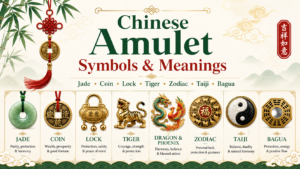
For a green bracelet, the card may connect the color with Wood-element themes. For an incense bead bracelet, the card may focus on fragrance culture, craftsmanship, and tactile experience. For a zodiac amulet, the card can identify the animal and explain a conventional cultural theme. For a crystal tree, it may focus on symbolic décor, gifting, and display.
Meaning Cards Should Not Replace Material Information
Cultural storytelling does not excuse vague product facts. If a bracelet is crystal, identify the stone as accurately as possible. If it contains plated metal, say so. If a product is resin, glass, synthetic stone, treated material, natural wood, or incense compound, avoid allowing the symbolic story to imply a different material.
A useful card can include:
- Material name
- Bead or pendant size
- Color variation note
- Care instructions
- Metal-part information where relevant
- Natural variation disclaimer
- Country or production information when appropriate
Material accuracy strengthens trust because the customer can separate “what the object is” from “what the story means.”
Product Meaning Card Examples for Chinese Zodiac Gifts
Example 1: Horse Zodiac Bracelet
HORSE · MOVEMENT & OPEN HORIZONS
In Chinese zodiac culture, the Horse is commonly associated with movement, vitality, independence, and open horizons. This bracelet uses the Horse as a cultural motif and gift story for birthdays, New Year celebrations, and personal milestones.
Created for cultural symbolism, personal reflection, and gifting. No specific outcome is guaranteed.
Avoid turning animal symbolism into fixed personality stereotypes. “Horse is commonly associated with movement” is more responsible than “Horse people cannot stay in one place.” The distinction matters because the card should introduce a cultural theme, not diagnose the recipient.
Product Meaning Card Examples for Five Elements Products
Example 2: Wood Element Bracelet
WOOD · GROWTH & RENEWAL
Wood is one of the Five Elements of Chinese culture and is traditionally associated with spring, green and blue-green colors, growth, flexibility, planning, and renewal. This bracelet uses a botanical color palette as a symbolic reminder of development and new direction.
This product is a cultural and symbolic accessory, not a guaranteed method for changing a birth chart or life outcome.
The same framework can be adapted for Fire, Earth, Metal, and Water. Keep the cards visually consistent while changing the colors, associations, and message.
How to Write Cards for Amulets and Protective Symbols
Amulet copy needs extra care because the word “protection” can quickly turn into a guaranteed safety claim. A historical or traditional motif can absolutely be described as protective symbolism. What should be avoided is claiming that the object will prevent accidents, illness, legal issues, or other harm.
Responsible Example
TIGER · COURAGE & PROTECTIVE SYMBOLISM
This tiger motif draws on traditional Chinese imagery associated with bravery and protective intention. It is offered as a cultural keepsake and symbolic reminder of courage.
Avoid
“This tiger amulet blocks danger, prevents accidents, and protects the wearer from all negative forces.”
Use the Card to Turn a Product into a Gift Story
The emotional part of the card should focus on the giver and recipient. A product may have a general cultural meaning, but the gift message explains why it matters now.
Graduation
“For everything you have learned and the next chapter you are ready to build.”
New Job
“A small reminder to keep learning, adapting, and moving forward with purpose.”
Wedding
“Chosen as a symbol of partnership, care, and the life you continue to build together.”
Chinese New Year
“Wishing you a year of thoughtful choices, warm connections, and meaningful progress.”
Family Gift
“A small keepsake for the care, continuity, and memories that connect our family.”
Personal Reset
“A reminder that renewal can be gradual, flexible, and still meaningful.”
Design Product Meaning Cards for Readability, Not Decoration Alone
The best card is the one the customer actually reads. A complicated background, tiny serif type, crowded symbols, or low contrast can make a premium card unusable.
For most product inserts:
- Use one clear title
- Limit the main explanation to roughly 50–120 words
- Keep the cultural term visible but explain it in plain English
- Use high-contrast text
- Leave enough white space
- Keep QR codes away from folds
- Proofread names and transliteration
- Print a physical sample before mass production
A bright ivory or cream background with jade green, warm gold, and limited accent colors works well for cultural gift products because it feels premium without making the insert too dark or difficult to read.
Translation and Localization: Do Not Translate Symbolism Word for Word
A card written for English-speaking customers may need more context than a Chinese-language card. Terms such as Wu Xing, Bazi, Bagua, Taiji, fu talisman, or the Heavenly Stems should not be dropped into copy without explanation simply because they are familiar to the writer.
Localization should check:
- Whether the cultural term needs a short definition
- Whether an animal name has multiple translations, such as Goat / Sheep / Ram
- Whether the wording sounds like a guaranteed claim in the target language
- Whether the gift message fits the target market
- Whether the translated card is still readable at the chosen size
Maintain a master glossary so every partner uses the same approved names and explanations.
Product Meaning Cards for Wholesale and White-Label Programs
Meaning cards are especially useful for B2B because one approved content system can support multiple products and sales channels. The current Spiritual Product Wholesale service includes product meaning cards, partner-branded descriptions, packaging support, bundle suggestions, and compliant marketing copy for bracelets, crystals, amulets, cards, and gift sets.
A white-label card project should be treated like a controlled content system, not a one-off design file. Establish a master product code, approved source text, short-card version, long web version, translations, print dimensions, version number, and the date of the last review.
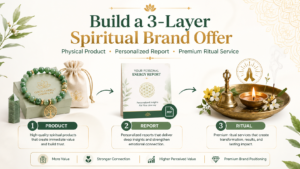
If the product also includes a personalized Bazi, zodiac, Five Elements, or annual report, keep the general product card separate from the customer-specific reading. The White-Label Destiny Reading Reports service can provide the personalized digital layer while the meaning card remains the evergreen product explanation.
Businesses that need custom meaning cards, blessing cards, product inserts, private-label packaging, report templates, or multilingual card systems can submit product type, target country, quantity, branding requirements, language, and delivery format through Partner Inquiry.
Pre-Print Product Meaning Card QA Checklist
- Product match: Does the card describe the actual SKU?
- Cultural source: Is the framework or motif identified accurately?
- Scope: Is modern interpretation clearly separated from historical certainty?
- Material facts: Are material and construction details accurate?
- Claims: Are medical, financial, legal, romantic, safety, or guaranteed-result claims absent?
- Stereotypes: Does zodiac or personality wording avoid absolute labels?
- Translation: Have cultural terms and names been reviewed?
- Typography: Is the physical sample easy to read?
- Version control: Does the printer have the approved latest file?
- Channel consistency: Does the card match the product page, ad, and customer-service wording?
For large catalogs, run the checklist at the template level and the SKU level. Template approval catches structural risks; SKU approval catches mismatched stone names, zodiac signs, materials, sizes, and product-specific wording.
Common Product Meaning Card Mistakes
- Using the same meaning for every product. Generic copy weakens credibility.
- Listing ten symbolic meanings. Two or three strong themes are easier to remember.
- Presenting a modern interpretation as ancient fact. Use “inspired by” when appropriate.
- Replacing material disclosure with spiritual language. Customers still need factual product information.
- Promising measurable outcomes. Symbolism does not justify guaranteed medical, financial, romantic, legal, or safety claims.
- Using fear to increase conversion. Zodiac-year or protection products should not imply danger if the customer does not buy.
- Mixing product meaning with a personalized reading. A general insert and an individual report serve different functions.
- Skipping physical proofing. A perfect PDF can still become unreadable after trimming, folding, or printing.
Build Product Meaning Cards for Your Brand or Gift Collection
Prepare your product category, material information, symbol or cultural theme, target market, card size, language, branding style, quantity, and whether you also need blessing cards, packaging, or white-label reports.
Explore Blessing Cards Request a Partner Card PlanFrequently Asked Questions About Product Meaning Cards
What is a product meaning card?
It is a printed or digital insert that explains a product’s material, cultural symbolism, motif, gift story, care information, or optional service context in concise customer-friendly language.
What should a product meaning card include?
A strong card usually includes the product or symbol name, cultural context, two or three symbolic themes, connection to the product, a human gift message, and a responsible non-guarantee boundary.
How long should a product meaning card be?
For most small retail inserts, roughly 50–120 words of main copy is easier to read than a long essay. More detailed cultural information can be placed on a product page or QR-linked guide.
Can meaning cards increase product value?
They can increase clarity, gift readiness, perceived completeness, and brand consistency by helping customers understand the product story.
Can I write that a crystal heals anxiety?
No. Product cards should not present crystals or spiritual products as diagnosing, treating, curing, or preventing medical or psychological conditions.
Can a prosperity card say the product attracts money?
Use symbolic and auspicious language instead. A card can describe prosperity themes or business wishes without guaranteeing financial gain.
How should I write a zodiac meaning card?
Name the animal, explain two or three commonly associated cultural themes, connect the design to the gift, avoid fixed personality stereotypes, and close with non-guarantee wording.
How should I write a Five Elements meaning card?
Name the phase, explain its common associations such as color, season, movement, or symbolic themes, and avoid presenting the product as a compulsory remedy for a birth chart.
Can an amulet card use the word protection?
Yes when describing traditional protective symbolism, but avoid claiming that the object guarantees safety, prevents accidents, or eliminates legal, medical, or other risks.
Should material information appear on the card?
When space allows, include material or care information. At minimum, ensure the card does not imply a material that differs from the actual product.
Can one card be used for multiple products?
A master template can be reused, but product-specific details should be changed. Cards that are identical across unrelated products often feel generic and can create factual errors.
Do I need a disclaimer on every card?
A short context note is useful for symbolic or spiritual products. The exact wording can vary by product, market, packaging size, and the broader product-page disclosures.
Can meaning cards be white-labeled?
Yes. Brands can adapt logo, colors, typography, product story, language, and customer-facing wording while keeping the underlying cultural and compliance framework consistent.
What is the difference between a meaning card and a reading report?
A meaning card explains the general product or cultural symbol. A reading report is personalized and may use customer-specific information such as birth data or a selected question theme.
What should I send for a custom card project?
Provide product category, material information, cultural motif, target country, desired card size, language, branding assets, quantity, and whether packaging or white-label report support is also required.