
The Five Elements in Chinese Culture: A Complete Beginner’s Guide
Wood, Fire, Earth, Metal, and Water form one of the most influential classification systems in traditional Chinese thought. Rather than five fixed substances, they describe dynamic phases, relationships, seasonal movements, and patterns of transformation.
The Five Elements appear in Chinese philosophy, calendars, seasonal theory, ritual symbolism, traditional medicine, music, architecture, martial culture, Bazi reading, zodiac interpretation, colors, directions, and modern spiritual products. Because the English word “element” can suggest a fixed material building block, beginners often misunderstand the system before they begin. The Chinese term Wu Xing is more accurately approached as five phases, five processes, or five modes of change.
This guide explains what the Five Elements mean, how their cycles work, how they relate to Yin and Yang, and how they are used in Bazi, zodiac, lifestyle symbolism, bracelets, blessing cards, and cultural gifts. It also corrects common misconceptions such as “everyone must have exactly twenty percent of each element” or “wearing one color automatically fixes a missing element.” Readers who want a personal interpretation can visit the Five Elements Reading service, while the shorter Five Elements Guide hub connects related products and reading pages.
What Are the Five Elements in Chinese Culture?
Beginner definition: The Chinese Five Elements, or Wu Xing (五行), are Wood, Fire, Earth, Metal, and Water. They form a relational model used to organize patterns of growth, activity, stabilization, contraction, storage, transformation, and cyclical change.
The five categories are not normally treated as isolated objects. Their meaning comes from relationship: one phase may support another, regulate another, become excessive in a given context, or change function according to season and position. This relational logic is why diagrams usually show arrows moving between the five rather than five separate boxes.
In modern English-language content, “Five Elements” remains the most recognizable search term. “Five Phases,” “Five Processes,” and “Five Agents” are useful alternatives because they highlight movement and function. A culturally responsible article can use the familiar phrase for accessibility while explaining its limitations.
The Five Elements do not belong exclusively to one modern religion, commercial method, or product category. The framework developed across Chinese intellectual and cultural history and was used in multiple traditions. Taoist communities made use of it, but it also appears in broader Chinese cosmology, medicine, statecraft, calendrical systems, music, divination, and later philosophical synthesis.
Why “Five Phases” May Be More Accurate Than “Five Elements”
Many Western readers encounter classical Greek ideas of earth, water, air, and fire as basic substances from which matter is composed. Wu Xing works differently. Wood, Fire, Earth, Metal, and Water can refer to materials, but their deeper role is functional and process-based.
Wood is not limited to literal timber. It can describe sprouting, extension, flexibility, direction, and growth. Fire is not only flame; it can represent rising activity, visibility, warmth, and expression. Metal is not merely a physical object; it can symbolize refinement, consolidation, structure, and contraction.
Thinking in phases changes the beginner’s central question. Instead of asking, “Which element am I?” ask, “What patterns are active, supported, constrained, seasonal, or useful in this particular system?” A Bazi chart, zodiac-year label, room design, bracelet description, and traditional medical model may all use the same five names, but they do not necessarily apply them in the same way.
Historical and Cultural Context
Fivefold classification developed in early Chinese thought and became increasingly systematized over time. Early texts discussed the characteristic actions of Water, Fire, Wood, Metal, and Earth. Later thinkers connected these phases with political cycles, seasons, directions, colors, sounds, tastes, organs, planets, virtues, and other categories.
By the Han period, Five Phases theory had become closely associated with Yin–Yang correlative cosmology. This did not produce one unchanging chart used identically by every tradition. Instead, it provided a flexible framework through which scholars and practitioners organized correspondence and transformation across different fields.
In later Chinese culture, the system appeared in traditional medicine, architecture, military thought, music theory, ritual calendars, internal cultivation, alchemy, naming practices, Bazi, Feng Shui, and popular symbolism. Some associations became widespread; others varied by school, historical period, or practical purpose.
A beginner should therefore distinguish between the core five-phase model and a specific table of correspondences. Wood is commonly linked with spring and east, for example, but a product seller should not claim that every green object automatically carries a measurable universal force. Cultural associations provide a language of meaning; they do not prove a guaranteed effect.
The Five Elements at a Glance
Wood
Growth, extension, renewal, flexibility, planning and spring movement.
Fire
Warmth, activity, visibility, expression, illumination and summer expansion.
Earth
Support, cultivation, transition, stability, containment and centering.
Metal
Structure, refinement, boundaries, consolidation, clarity and autumn contraction.
Water
Flow, depth, storage, adaptation, communication and winter stillness.
| Phase | Chinese | Common Season | Common Direction | Common Color Family | Process-Oriented Theme |
|---|---|---|---|---|---|
| Wood | 木 · Mù | Spring | East | Green or blue-green | Sprouting, extending and developing |
| Fire | 火 · Huǒ | Summer | South | Red | Rising, warming and becoming visible |
| Earth | 土 · Tǔ | Seasonal transitions or central position | Center | Yellow and earth tones | Transforming, supporting and stabilizing |
| Metal | 金 · Jīn | Autumn | West | White and metallic tones | Condensing, refining and defining |
| Water | 水 · Shuǐ | Winter | North | Black and dark blue | Storing, descending and flowing |
These correspondences are useful learning tools, but they should not be treated as rigid universal laws. Earth may be linked with the center, seasonal transitions, or late summer depending on the system. Color meanings can also change across ritual, historical, artistic, and commercial contexts.
Wood Element Meaning
Wood is associated with the movement of spring: emergence after storage, upward growth, branching, planning, and the ability to extend into new space. A young shoot is flexible but directional; a mature tree combines expansion with structure. These images help explain why Wood symbolism often appears in language about development, creativity, education, initiative, and long-term planning.
Wood should not be reduced to “kind and creative.” In a relational model, healthy Wood may suggest adaptable growth and clear direction. Excessive or constrained Wood may be used metaphorically to discuss overextension, frustration, rigidity, or plans that cannot find a suitable channel. These are interpretive themes rather than psychological diagnoses.
For products, Wood themes may be represented through green tones, plant imagery, wooden or aromatic materials, growth motifs, spring gifting, and messages about renewal. An Incense Bead Bracelet can connect naturally with material culture and reflective intention, but its description should not claim to cure the body or guarantee personal growth.
Fire Element Meaning
Fire corresponds with heat, illumination, upward movement, activity, visibility, and summer expansion. It can symbolize enthusiasm, social expression, celebration, recognition, warmth, and the moment when something becomes visible to others.
Fire is not automatically positive because it feels energetic. A controlled flame provides light and warmth; uncontrolled fire consumes resources. In reflective language, Fire can therefore support discussion of communication, presence, joy, urgency, attention, or overstimulation. Context determines whether more activity is helpful.
Red accents, lamp imagery, sunlight, warm-colored stones, festival packaging, and celebratory cards are common modern expressions. A cultural gift may use Fire symbolism to mark a launch, performance, graduation, wedding celebration, or summer occasion without promising fame, romance, or commercial success.
Earth Element Meaning
Earth is associated with cultivation, nourishment, support, containment, transformation, and centrality. Soil receives seeds, supports roots, and converts organic matter. This makes Earth a useful metaphor for stability, practical care, continuity, mediation, and the work of turning plans into something sustainable.
Earth also has a transitional role in many correspondence systems. Rather than belonging only to one season, it may represent the center or the periods between seasons. This helps explain its connection with integration and change management rather than simple stillness.
In lifestyle and product storytelling, Earth may be expressed through yellow, beige, brown, ceramic, stone, mountain imagery, square forms, grounding messages, and home-related gifts. “Grounding” should be explained as a symbolic or reflective idea, not as a clinical treatment for anxiety or another health condition.
Metal Element Meaning
Metal is associated with autumn, consolidation, refinement, standards, boundaries, structure, and contraction. Ore is extracted and refined; a blade separates; a bell produces a clear tone. These images connect Metal with definition, precision, justice, editing, discipline, and the ability to release what is no longer useful.
Metal does not mean coldness or material wealth in every context. The Chinese character jin can refer to metal and is also used in the word for gold, but a Metal label in a chart is not a promise of money. In reflective interpretation, it may support discussion of organization, boundaries, decisiveness, refinement, or excessive rigidity.
White, silver, gold, metallic details, circular forms, bells, refined jewelry, and minimalist packaging often support Metal-themed design. These choices can create coherent cultural storytelling for Crystal Bracelets and gift sets without claiming that a metal color changes fate.
Water Element Meaning
Water is associated with winter, storage, depth, downward movement, adaptability, communication, and the ability to find a path around obstacles. It can be still like a deep pool or active like a river. This range makes Water a useful metaphor for reflection, wisdom, movement, uncertainty, and hidden potential.
Water symbolism does not always mean calmness. Flooding, dispersal, fear, or lack of boundaries can also appear in traditional and modern metaphors. A responsible interpretation asks how Water functions within the whole pattern rather than labeling it good or bad.
Black, dark blue, wave patterns, flowing lines, glass, reflective surfaces, and winter themes may be used in product design. A blessing card can describe Water as a reminder of adaptability and thoughtful movement, not as a guarantee that difficulties will disappear.
The Generating and Controlling Cycles
The Five Elements become meaningful through their cycles. The two most widely taught are the generating cycle and the controlling cycle. “Generating” does not mean creating matter from nothing, and “controlling” does not necessarily mean destruction. They are models of support, regulation, transformation, and limitation.
The Generating Cycle
Wood Generates Fire
Wood can fuel flame. Symbolically, growth, planning, and resources can support activity, visibility, or expression.
Fire Generates Earth
Fire leaves ash and transforms material. Symbolically, intense activity can produce results, residue, or a new stable condition.
Earth Generates Metal
Metal ores are found within the earth. Symbolically, cultivation and structure can produce refinement, value, or clear form.
Metal Generates Water
Traditional explanations often use condensation on metal or the association between mineral structure and water sources. Symbolically, refinement and containment can support collection or flow.
Water Generates Wood
Water nourishes vegetation. Symbolically, stored resources, reflection, and communication can support development and renewal.
The Controlling Cycle
- Wood controls Earth: roots penetrate and stabilize or divide soil.
- Earth controls Water: banks, channels, and dams direct water.
- Water controls Fire: water can cool or extinguish flame.
- Fire controls Metal: heat melts and transforms metal.
- Metal controls Wood: metal tools cut or shape wood.
Control is necessary in a functioning system. Water without banks may disperse; Fire without regulation may consume; Wood without pruning may become tangled. A controlling relationship can therefore describe useful boundaries rather than conflict alone.
Other Cycle Language
Advanced texts may discuss weakening, insulting, overacting, draining, or reversal relationships. Beginners should learn the generating and controlling cycles first. Product content rarely needs advanced cycle terminology unless it is reviewed by a qualified practitioner and explained clearly.
How the Five Elements Relate to Yin and Yang
Yin–Yang and Wu Xing are connected but not identical systems. Yin and Yang describe complementary modes such as inward and outward, receptive and active, dark and light, stillness and movement. The Five Phases provide a fivefold model of change. Later Chinese correlative systems often used them together.
Each phase can appear in Yin and Yang forms. In the Heavenly Stems used by Bazi, for example, there are Yang Wood and Yin Wood, Yang Fire and Yin Fire, and corresponding polarities for Earth, Metal, and Water. This creates ten stems rather than five.
Yin does not mean bad, weak, or female in a simplistic personality sense, and Yang does not mean good, powerful, or male. They are relational qualities. A candle and the sun can both illustrate Fire, but their scale, direction, and mode differ. The same principle applies to a vine and a large tree as teaching metaphors for different Wood expressions.
The Five Elements in Bazi Reading
Bazi, or the Four Pillars of Destiny, converts a birth year, month, day, and hour into eight Heavenly Stem and Earthly Branch characters. Those characters carry Five Phase and Yin–Yang associations. A reader studies their seasonal context, relationships, roots, combinations, and functions.
Beginners often count how many times each element appears and assume the lowest number must be added. This is unreliable. A visible count may omit hidden stems, seasonal strength, transformation, and the relationship of each phase to the Day Master. An element may be scarce but unhelpful, abundant but necessary, or present indirectly.
A Five Elements summary may discuss dominant patterns, supportive themes, and symbolic product directions, but it should explain the reasoning. For a full chart context, visit the Bazi Reading service or the beginner article What Is Bazi Reading?.
The Five Elements and Chinese Zodiac
The twelve zodiac animals are connected with the Earthly Branches. The sixty-year Stem–Branch cycle also combines each year branch with a Heavenly Stem, creating labels such as Wood Dragon, Fire Horse, Earth Dog, Metal Rat, or Water Rabbit.
A person’s zodiac-year element is only one layer. It does not replace the full Bazi chart, which includes year, month, day, and hour. Two people born in the same animal year may have different Day Masters, seasonal structures, hour pillars, and life experiences.
Zodiac-element labels are useful for broad cultural education, New Year campaigns, cards, social posts, and gift collections. Personalized claims should remain modest. Readers interested in year-sign symbolism can use the Chinese Zodiac Reading or browse the Zodiac Guide.
Where the Five Elements Appear in Chinese Culture
Calendars and Seasons
The phases help organize seasonal movement, directions, colors, and cyclical change. The exact correspondence table depends on the tradition and purpose.
Traditional Medicine
Traditional Chinese medical theory uses Five Phase correspondences to organize functional relationships. This cultural framework should not be turned into self-diagnosis or a substitute for licensed healthcare.
Music and Ritual
Fivefold associations have appeared in pitch systems, ritual order, directions, colors, offerings, and ceremonial design. Application varies across periods and communities.
Architecture and Space
Direction, color, form, season, and material may be organized through correlative systems in architecture and Feng Shui traditions. There is no single universal decorating formula.
Bazi and Divination
Five Phase relationships are foundational in Bazi and appear in other Chinese metaphysical systems. Each method has its own technical rules.
Art, Gifts and Branding
Modern creators use Five Elements themes for jewelry, packaging, cards, seasonal collections, décor, and educational content.
Cultural influence does not mean every historical use is scientifically validated. A careful website can explain traditional models, symbolism, and lived cultural meaning while distinguishing them from modern medical, psychological, legal, or financial evidence.
Five Elements Colors, Bracelets, Crystals and Spiritual Gifts
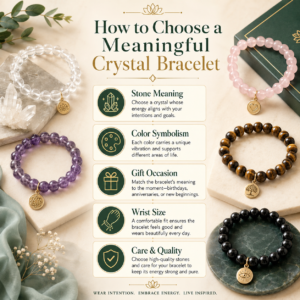
Five Elements symbolism works well in products because it provides a coherent story linking color, material, intention, season, and gift occasion. A customer may choose a bracelet as a reminder of growth, clarity, steadiness, expression, or adaptability. That meaning can be personal without being presented as a guaranteed force.
Color Associations
- Wood: green, blue-green, botanical and spring palettes
- Fire: red, coral, warm purple, orange and luminous accents
- Earth: yellow, beige, brown, sand and warm neutral palettes
- Metal: white, silver, gold, gray and polished metallic palettes
- Water: black, dark blue, deep gray and reflective palettes
Color is one interpretive layer, not a complete reading. A red stone is not automatically the correct choice for every person who appears to have “low Fire.” Product suitability may also involve material, style, wrist size, cultural preference, budget, occasion, and the reader’s method.
Bracelets and Gift Sets
The site’s Spiritual Bracelets pathway can combine Five Elements symbolism with crystal or incense bead products. Blessed Gift Sets can include a bracelet, meaning card, blessing card, report summary, or ritual-completion note.
Blessing Cards and Product Meaning Cards
A card can explain the selected phase, its cultural associations, the intended reflective message, care instructions, and the non-guarantee service boundary. The Blessing Cards category supports personal and white-label inserts.
What Does “Balancing the Five Elements” Really Mean?
“Balance” is one of the most overused words in commercial Five Elements content. It does not necessarily mean equal quantities. A living system changes by season, role, timing, and purpose. Balance may mean that the phases can support and regulate one another appropriately in a particular context.
Consider a simple analogy: a recipe is not balanced because it contains equal weights of salt, water, flour, and spice. It is balanced because each ingredient performs a suitable function. In the same way, a Bazi reader may discuss whether a phase supports the chart’s structure rather than whether its percentage matches the others.
For lifestyle reflection, balancing language can describe practical intentions: creating more structure, allowing more rest, communicating clearly, developing a plan, or reducing overextension. These are prompts for personal consideration, not prescribed treatment.
Avoid statements such as “You must wear Metal every day,” “Your missing Water causes kidney disease,” or “This bracelet will repair your love life.” Such claims confuse cultural symbolism with medical causation and guaranteed outcomes.
What Can a Five Elements Reading Include?
A Five Elements reading may be a standalone symbolic report or part of a Bazi service. The level of detail depends on the package, birth information, reader, language, privacy needs, and whether the request is personal or commercial.
- Birth-information review when the report is Bazi-based
- Overview of visible and contextual element patterns
- Explanation of dominant, supportive, or regulating themes
- Yin–Yang and seasonal context when included
- Personality and lifestyle reflection prompts
- Work, communication, relationship, or annual-planning themes
- Symbolic color, bracelet, crystal, card, or gift suggestions
- Short PDF, detailed report, message summary, or image card
- Clear limitations and non-guarantee wording
A basic element summary should not be marketed as equivalent to a full Bazi analysis. The provider should clarify whether recommendations come from a year sign, a simplified questionnaire, a full birth chart, or general gift symbolism.
Request a Personal Five Elements Reading
Share whether you need a general element summary, Bazi-based Five Elements report, bracelet or gift recommendation, annual reflection, or a combined reading-and-product plan. The required information, report depth, language, delivery format, timing, quote, and privacy terms will be confirmed privately.
View Five Elements Reading Submit a Private InquiryFive Elements Content for B2B and White-Label Programs
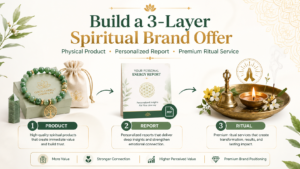
Spiritual shops, jewelry brands, crystal stores, gift companies, live sellers, and private communities can use Five Elements content to organize products and offer personalized services. The strongest business model combines cultural education, clear product attributes, brand-consistent design, and compliant customer expectations.
Possible B2B Deliverables
- White-label Five Elements reports
- Short element summaries for customer delivery
- Bracelet and crystal meaning cards
- Five Elements packaging inserts
- Wood, Fire, Earth, Metal, and Water product collections
- Seasonal campaign copy and landing pages
- Personalized image cards
- Product recommendation scripts for customer service
- Retail and wholesale product descriptions
Partners can review White-Label Destiny Reading Reports for branded report formats and the Private Label Bracelet Program for product development. A structured program should define customer consent, birth-data handling, report scope, revision rules, turnaround, product claims, branding rights, and delivery responsibilities.
SEO content should not repeat identical paragraphs across five category pages. Each element collection needs distinct search intent, material examples, gift occasions, styling, FAQs, and internal links. The current long-form guide can serve as the educational pillar, while separate Wood, Fire, Earth, Metal, and Water pages can later target narrower keywords.
Common Five Elements Mistakes
- Treating phases as fixed substances: Wu Xing primarily explains dynamic functions and relationships.
- Assuming equal percentages are ideal: useful balance depends on context, not automatic numerical equality.
- Using only the zodiac animal: a year sign is not a complete Bazi chart.
- Counting visible elements only: advanced readings may consider season, hidden stems, roots, and transformation.
- Calling every controlling relationship negative: regulation and boundaries can be necessary.
- Assigning one permanent personality: people cannot be reduced to “a Water person” or “a Fire person” without context.
- Turning symbolism into medical claims: Five Elements products do not diagnose or treat disease.
- Promising guaranteed wealth or love: cultural products and reports cannot ensure specific outcomes.
- Copying one correspondence table as universal: associations vary by field and tradition.
- Buying a product before understanding the method: ask whether the recommendation is general, zodiac-based, or Bazi-based.
Frequently Asked Questions About the Five Elements
What are the five Chinese elements?
They are Wood, Fire, Earth, Metal, and Water. Together they form Wu Xing, a traditional fivefold system for describing processes, relationships, seasonal movements, and transformation.
Are Five Elements and Five Phases the same?
Yes. “Five Elements” is the familiar English term, while “Five Phases” often communicates the dynamic and relational meaning of Wu Xing more accurately.
Is Wu Xing a Taoist concept?
Taoist traditions use Wu Xing, but the framework is broader than Taoism alone. It has appeared across Chinese philosophy, cosmology, medicine, calendars, divination, politics, music, and popular culture.
What is the generating cycle?
The generating sequence is Wood to Fire, Fire to Earth, Earth to Metal, Metal to Water, and Water to Wood. It models support and transformation rather than literal creation from nothing.
What is the controlling cycle?
Wood controls Earth, Earth controls Water, Water controls Fire, Fire controls Metal, and Metal controls Wood. Control can represent healthy regulation and boundaries, not only conflict.
What element am I?
The answer depends on the method. A zodiac year may have one Stem–Branch element label, while a Bazi reading uses the Day Master and the entire Four Pillars chart. One label does not describe the whole person.
How do I find my Five Elements?
A basic zodiac tool may show the element associated with a birth year. A detailed personal analysis normally requires birth date, time if available, birthplace, and a verified Bazi calculation.
Does a missing element need to be added?
Not automatically. A visible chart count can be misleading because season, hidden stems, strength, relationships, and chart structure matter. Ask for contextual interpretation before choosing a product.
Can colors balance the Five Elements?
Colors can express cultural symbolism and personal intention. They should not be presented as guaranteed methods for changing health, wealth, relationships, or fate.
Can a bracelet correct my Bazi chart?
A bracelet can serve as a symbolic reminder, cultural gift, or style choice. It cannot medically or scientifically “repair” a birth chart or guarantee a life outcome.
Are the Five Elements the same as Western classical elements?
No. The systems have different histories and structures. Wu Xing emphasizes five dynamic phases and cyclical relationships, while Western classical-element theories are commonly presented as basic constituents of matter.
How are the Five Elements used in Chinese zodiac?
Each zodiac year combines an Earthly Branch animal with a Heavenly Stem carrying an element and Yin–Yang polarity. This creates a sixty-year cycle, but the year label is only one part of a full Bazi chart.
Can Five Elements reading help choose a gift?
Yes. It can support symbolic choices involving colors, bracelets, crystals, incense beads, blessing cards, and gift sets, provided the recommendation is described as cultural and non-guaranteed.
Is Five Elements theory medical advice?
No. Traditional Chinese medicine historically uses Five Phase theory, but an online cultural article, bracelet, or symbolic report cannot diagnose or treat medical conditions and should not replace qualified healthcare.
Can businesses use Five Elements content?
Yes. It can support product collections, cards, packaging, reports, seasonal campaigns, and white-label services. Businesses should use accurate cultural explanations and avoid guaranteed medical, financial, romantic, or psychological claims.
Related Five Elements, Reading and Product Pages
Build a Personal or White-Label Five Elements Plan
Tell the team whether you need personal reflection, Bazi-based element analysis, bracelet matching, a spiritual gift set, product meaning cards, a seasonal collection, or a white-label report program. The service scope, required information, delivery format, timing, pricing, privacy, and compliant wording will be confirmed privately.
Submit a Private Inquiry Request a Partner Plan